Serving Washington, DC and Northern Virginia

Refrigerant and repair

What a Discontinued Refrigerant Means for Your System

It does not make your system illegal, and it does not make it unfixable. It changes how a repair gets sourced, what a leak costs you in decisions, and what a replacement has to match.

Updated August 23, 2026

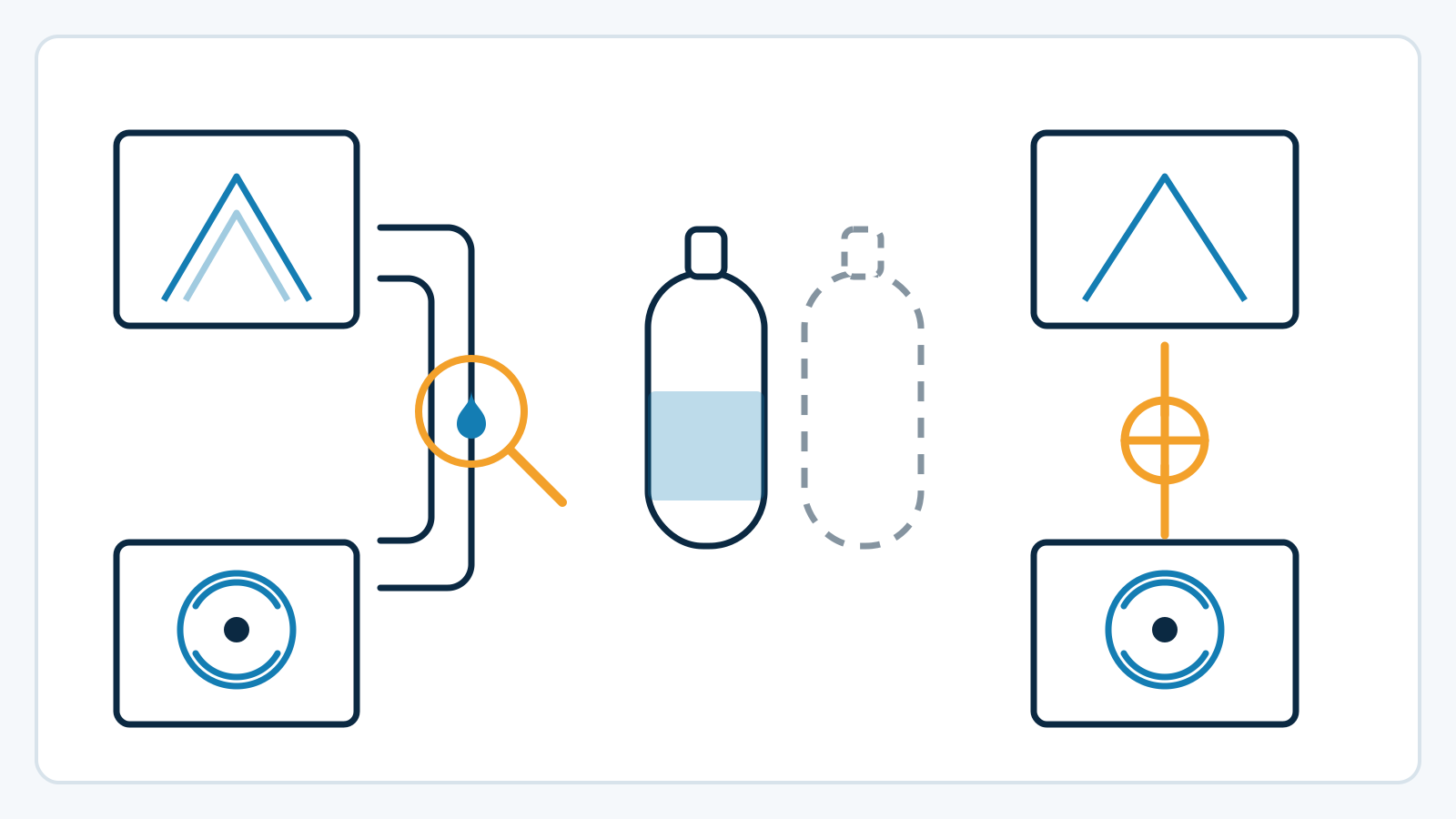
Illustration of an existing air conditioning system, a refrigerant supply that is no longer produced, and matched replacement equipment
New supply and new equipment changed. The system in your property did not.

01

Discontinued applies to new supply, not to your equipment

EPA phased out new United States production and import of most HCFCs, including R-22, as of 2020. EPA also records that R-22 is the most common HCFC still in use today, in existing air conditioners and refrigeration equipment. Servicing an existing system draws on supply that already exists rather than on new production. Your system didn't become illegal.

02

A leak is where the real decision starts

Refrigerant isn't consumed the way fuel is. If the level is low, it went somewhere. Adding more without finding the leak sends the same refrigerant back out and puts you in the same place next season. Where the leak is, and what it would take to reach it, matters far more than the label on the cylinder.

03

The 2025 rules changed new equipment, not installed systems

Under the AIM Act, EPA restricts the manufacture, distribution, sale, installation, import and export of products containing restricted HFCs from 1 January 2025. For residential and light commercial air conditioning and heat pump systems, including mini splits and unitary systems, the limit is a global warming potential of 700. The EPA sector table records no installation compliance date for systems where all specified components were manufactured or imported before that date.

04

Matching matters more than the label

Indoor and outdoor equipment is designed around a specific refrigerant. Replace one half and the other half has to be compatible, or the pair will not perform the way either piece was rated. That is a scope question for the written quote, not a preference.

05

What actually decides repair or replacement

The fault, the condition of the rest of the equipment, whether a leak was found and where, and whether the refrigerant can still be sourced for that model. A discontinued refrigerant is one input. It isn't the verdict, and it is not a reason to skip the diagnosis.

06

Questions worth asking before you agree to anything

You should be able to repeat the answer back in plain words.

  • Which refrigerant does the system use
  • Was a leak found, and where
  • What would the repair actually do
  • If replacement is proposed, which refrigerant does the new equipment use
  • Are the indoor and outdoor components matched

Side-by-side

Put the choices on one page.

What the federal refrigerant rules change
The ruleWhat it applies toWhat it does not mean
Ozone phaseout of R-22 and most other HCFCsNew United States production and import, ended as of 2020That equipment already installed has to stop running
HFC restrictions from 1 January 2025Manufacture, distribution, sale, installation, import and export of new products above the sector limitAn order to remove systems already in service
Residential and light commercial air conditioning and heat pumpsA global warming potential limit of 700 for new systemsA limit on servicing a system installed before the compliance date
Systems whose components predate 1 January 2025No installation compliance date recorded by EPA for that casePermission to skip matching the indoor and outdoor components

Common questions

What customers ask.

Is it illegal to keep using a system with a discontinued refrigerant?

No. EPA ended new United States production and import of most HCFCs, including R-22, as of 2020. That phaseout does not order you to remove equipment already installed in your property. Separate EPA rules govern which refrigerants new products and systems may use.

Can a system with an older refrigerant still be repaired?

Often, yes. It depends on the fault, whether the refrigerant can still be sourced for that model and whether there is a leak. A discontinued refrigerant can make sourcing harder. It does not decide the repair by itself.

Does the 2025 refrigerant rule mean I have to replace my system?

No. Those restrictions apply to new products and newly installed systems above the sector limit. EPA records no installation compliance date for systems whose specified components were all made or imported before 1 January 2025.

Next step

Find out what the refrigerant actually changes.

Request a Quote