Serving Washington, DC and Northern Virginia

Duct cleaning decision

Is Duct Cleaning Worth It?

Sometimes. EPA does not recommend cleaning air ducts on a schedule, and it names three conditions where cleaning is worth considering. Start by working out which one you actually have.

Updated August 23, 2026

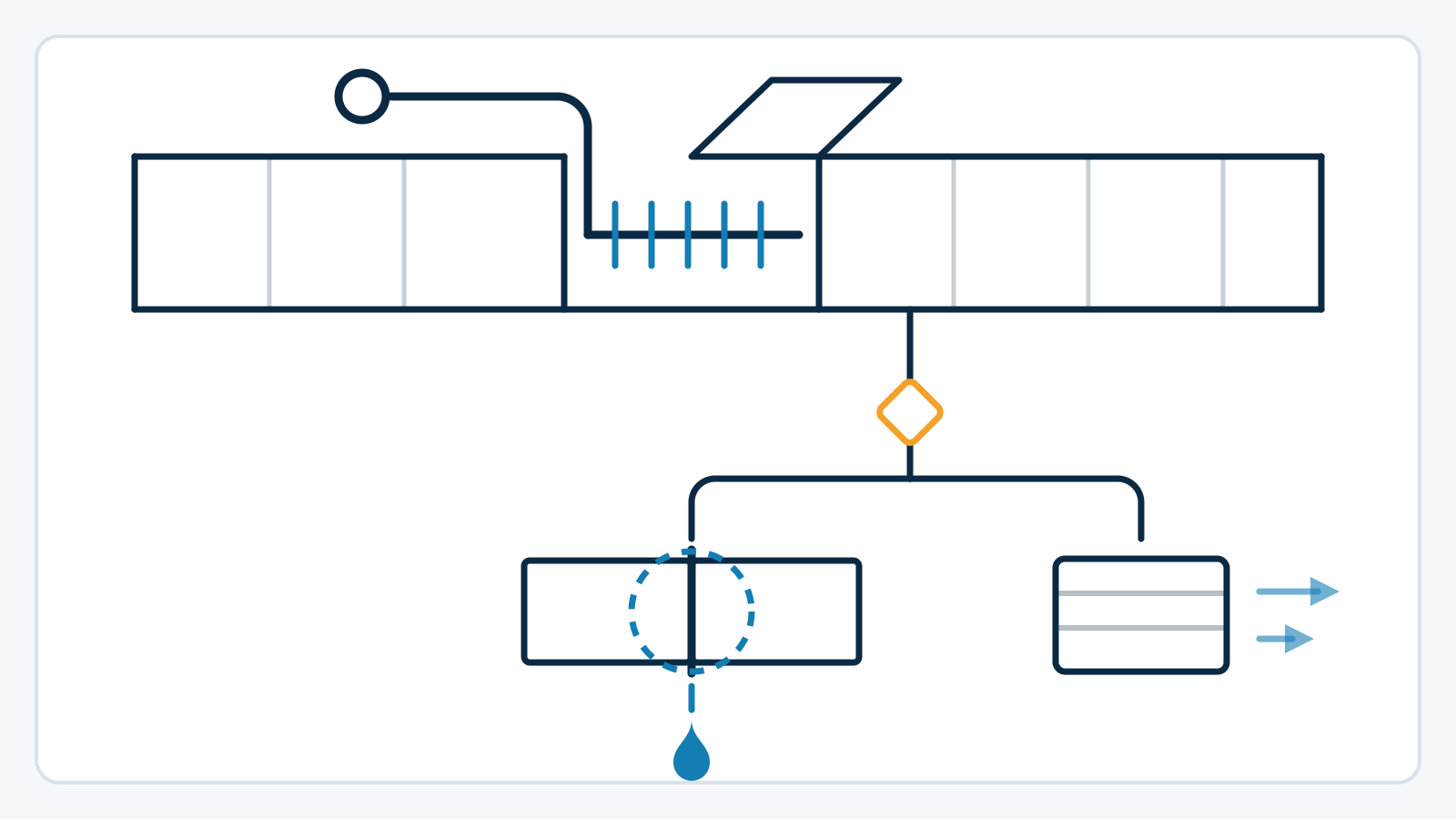
Illustration of a duct run with an access port open and a cleaning brush, beside a separate path leading to a moisture source and a weak register
Cleaning is one branch. Finding the cause is the other.

01

The honest answer, and where it comes from

EPA guidance for homeowners says knowledge about duct cleaning is still limited. It says duct cleaning has never been shown to prevent health problems. It says EPA does not recommend cleaning air ducts routinely, only as needed. EPA also says that if you decide to have them cleaned simply because ducts get dirty over time, no evidence suggests a properly done cleaning would be harmful. United cleans ducts. We'd still rather you know the reason before you book it.

02

The three conditions EPA names

EPA says to consider cleaning if there is substantial visible mold growth inside hard-surface ducts or on other system components, if the ducts are infested with rodents or insects, or if the ducts are clogged with so much dust and debris that particles are actually being released into rooms from the supply registers. If somebody tells you that you have one of these, ask them to show you.

  • Substantial visible mold on ducts or components
  • Rodents or insects in the ducts
  • Debris heavy enough to release particles into rooms
  • A provider willing to show you what they found

03

Cleaning without fixing the cause buys you a repeat

EPA is direct about this. When one of those conditions exists it usually points at an underlying cause, and the cause has to be corrected before cleaning, retrofitting or replacing ducts, or the problem comes back. Moisture is the common one. EPA also notes that insulated ducts whose insulation gets wet or moldy cannot be effectively cleaned and should be removed and replaced.

04

A weak room needs an airflow check

Rooms that feel weak or uneven can point to the air path rather than to dirt inside the ducts. Leaking or disconnected runs, a restricted return, a dirty coil, a blocked register or a blower problem can all cut airflow. EPA notes there is little evidence that cleaning only the ducts improves system efficiency, while some research suggests cleaning system components such as coils, fans and heat exchangers may. If the complaint is airflow, the diagnosis comes before the cleaning.

05

What to ask any provider, including us

EPA consumer advice on this is blunt. Do not hire duct cleaners who make sweeping claims about health benefits, and do not hire duct cleaners who recommend cleaning as a routine part of maintenance. Be wary of anyone claiming EPA certification: EPA neither sets duct-cleaning standards nor certifies, endorses or approves duct-cleaning companies.

  • Show me what you found
  • Which components are included
  • A written scope before work starts
  • No chemical biocide or sealant without a clear explanation
  • A visual check of the work when it is finished

06

Keep water and dirt out first

EPA's prevention guidance starts with keeping water and dirt out of the system. That means a filter that fits its slot and gets changed, duct connections that stay sealed and dry, and equipment that is not condensing where it should not. Cleaning without correcting the source leaves the same conditions in place.

Side-by-side

Put the choices on one page.

What EPA guidance supports for what you noticed
What you noticedWhat EPA guidance supportsWhat to do first
Visible mold on ducts or system componentsConsider cleaning, and ask to be shown itFind and correct the moisture source
Rodents or insects in the ductsConsider cleaningClose the way they got in
Particles blown into the room from the registersConsider cleaningCheck the filter fit and the return path
A room that feels weak or unevenNot a duct-cleaning finding on its ownDiagnose the air path and the equipment
Dust settling on furnitureHousehold dust has many sources, and dirty ducts are only oneCheck filtration and the everyday sources first
It has simply been a long timeA properly done cleaning is not shown to be harmfulBook it knowing it is a preference, not a repair

Common questions

What customers ask.

How often should air ducts be cleaned?

EPA does not recommend a schedule. It recommends cleaning ducts as needed, when there is substantial visible mold, a rodent or insect problem, or debris heavy enough that particles get released into rooms.

What are the signs air ducts need cleaning?

EPA names three: substantial visible mold inside hard-surface ducts or on system components, an infestation of rodents or insects, and ducts clogged with enough dust and debris that particles are released from the supply registers.

Will duct cleaning fix a dusty house?

Not on its own. EPA notes that much of the dirt in ducts sticks to the duct surfaces, and that cooking, cleaning and ordinary movement around a home produce more airborne particles than dirty ducts do.