
01
What mechanical cooling-tower work does United perform?
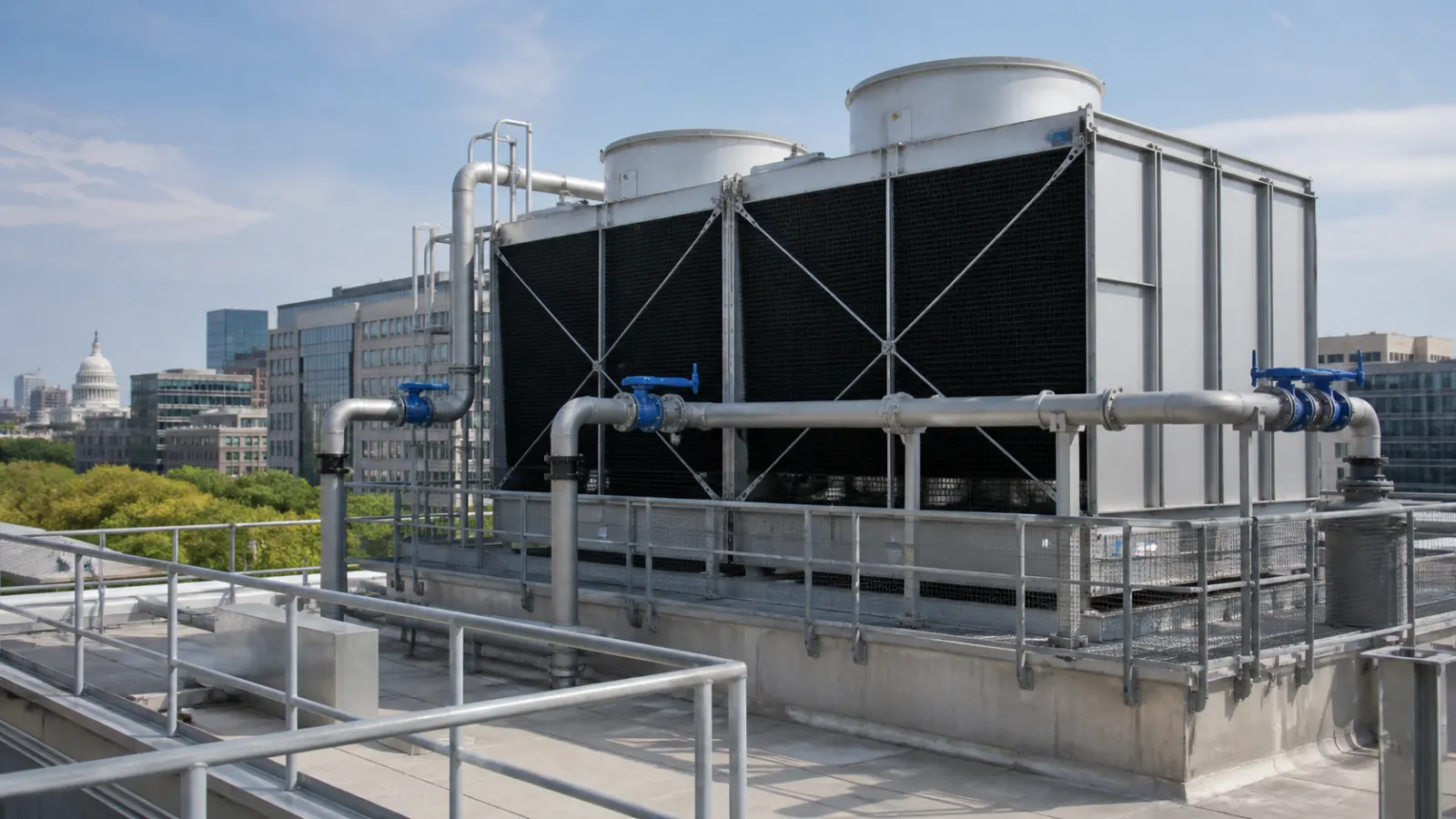
United diagnoses and services cooling-tower fans, motors, belts or drives, controls, water flow, and the mechanical equipment that rejects heat from the building system.
Commercial cooling towers
United services the mechanical side of cooling towers, including fans, drives, controls, water flow, and connected heat-rejection equipment.
Updated August 27, 2026
01
United diagnoses and services cooling-tower fans, motors, belts or drives, controls, water flow, and the mechanical equipment that rejects heat from the building system.
02
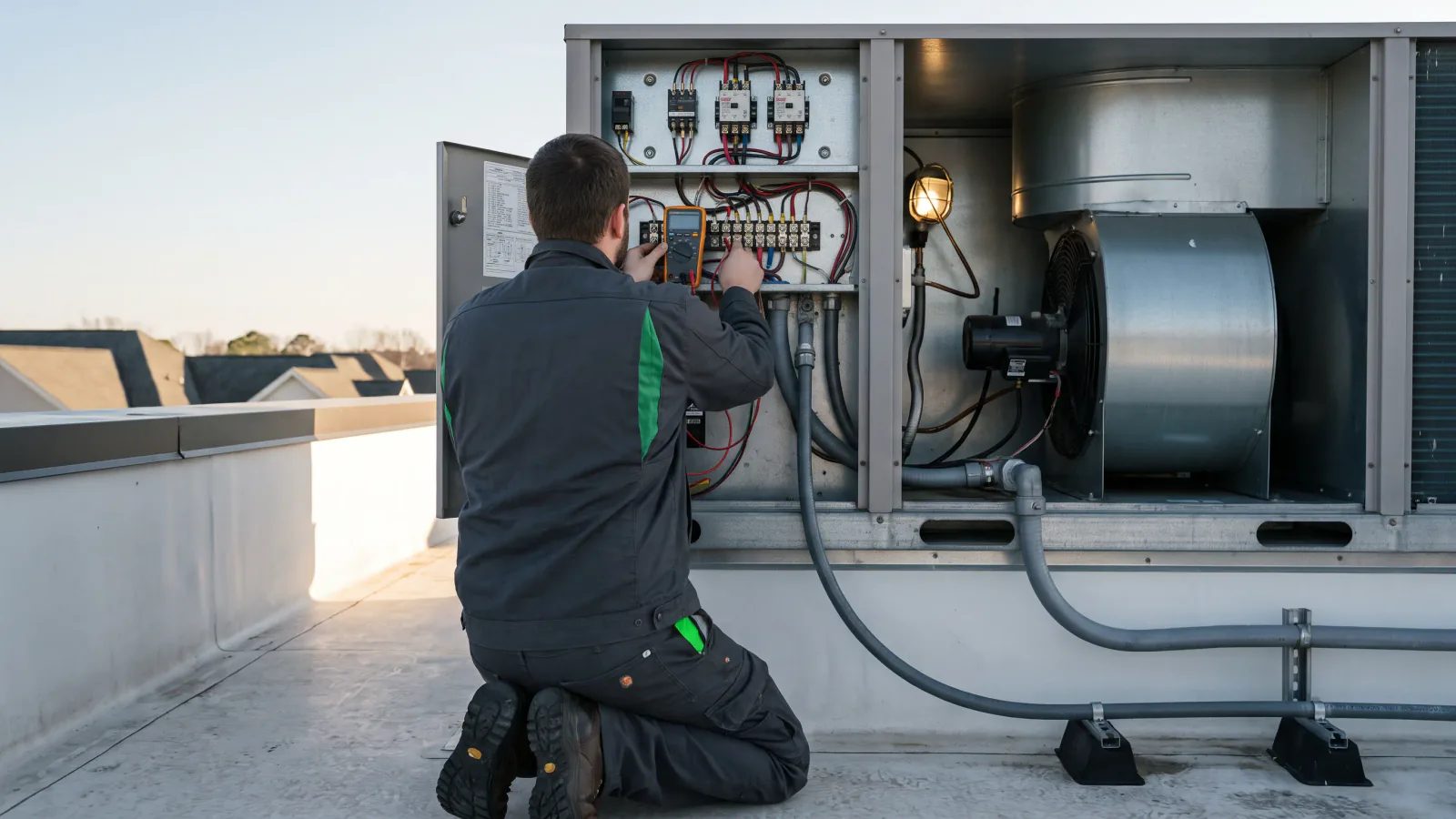
Share a loss of cooling, high system temperature, new vibration or noise, a fan that does not start, visible water where it should not be, repeated trips, or a control alarm. Keep clear of moving equipment and electrical panels.
03
Send the tower or system identifier, the affected building area, when the change began, control messages, operating schedule, roof access, and any recent mechanical work. Existing equipment records are useful when they are already available.
04
Tower type, fan and drive arrangement, controls, seasonal operation, building load, water flow, and outdoor conditions change what needs to be checked. A maintenance scope should follow the actual equipment.
05
Mechanical service addresses the operating equipment. A water-management program addresses water quality, scale, corrosion, microbial growth, testing, control measures, and records. The two scopes interact, but they are not the same job.
06
This page does not claim those services. Water treatment, cleaning, disinfection, environmental testing, and remediation should be scoped separately with a provider qualified for that work.
Common questions
Yes. Fans, drives, motors, controls, water flow, and connected mechanical equipment are part of United's cooling-tower service.
No. Mechanical service and water management are separate scopes. A building needs the appropriate water-treatment, testing, control, and recordkeeping work in addition to mechanical care.
Primary sources
Next step
Visits, diagnostics, and repair or installation estimates are free for homes and commercial properties.
Request a Free Estimate4.9 on Google from 28 reviews