Serving Washington, DC and Northern Virginia

Frozen coil

Why Is My AC Coil Freezing Up?

Ice usually points at the air moving across the coil or at the refrigerant inside it. Turn cooling off first. Running a frozen system is how a repair turns into a bigger one.

Updated August 23, 2026

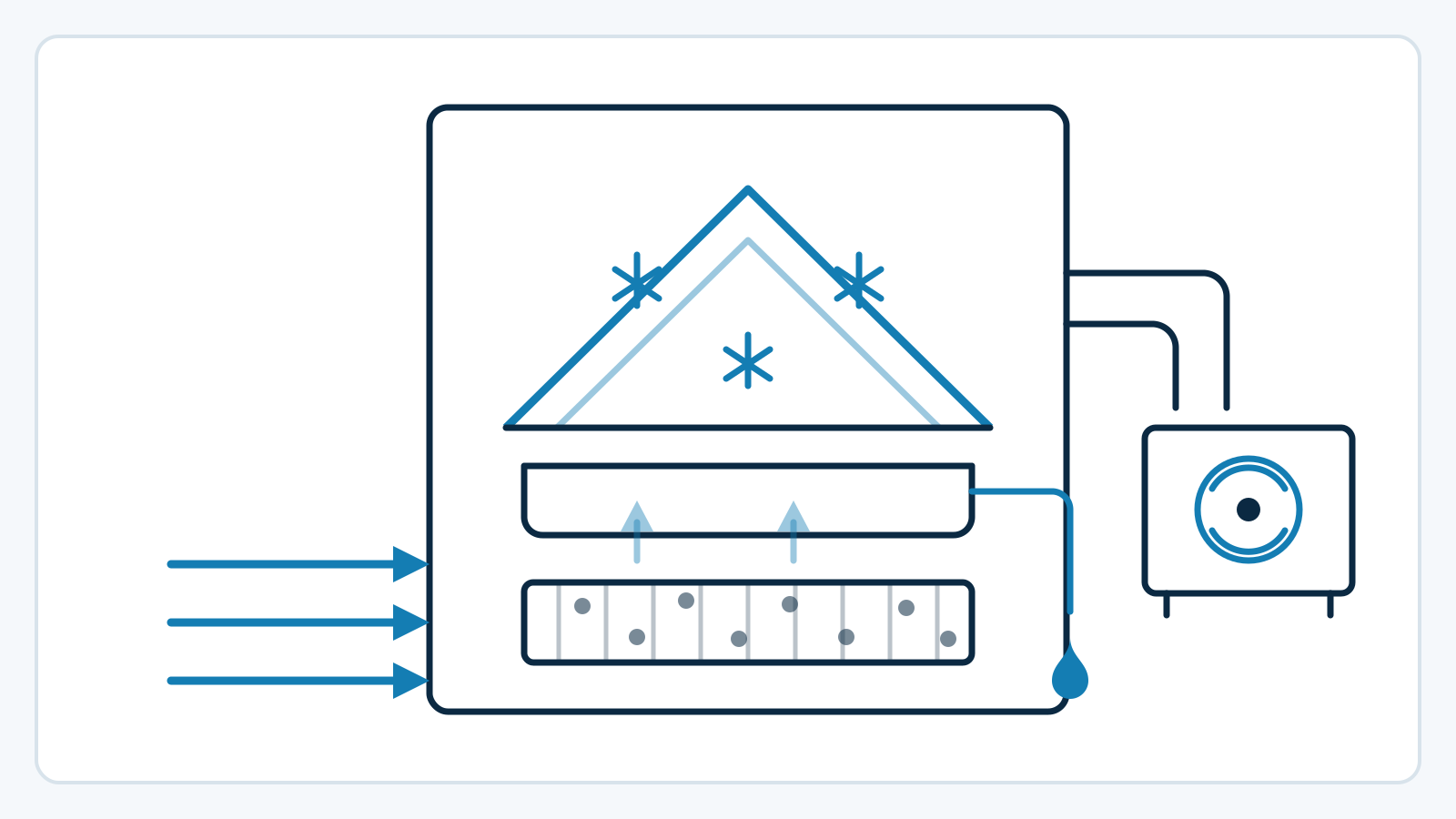
Illustration of a frozen indoor evaporator coil with restricted airflow and a condensate pan below
Ice on the coil is a symptom. Airflow and refrigerant are the two families it comes from.

01

Turn cooling off before anything else

Set the thermostat to off and leave cooling off until the visible ice has melted. Watch for water around the indoor equipment as it thaws. Do not open equipment panels or work on refrigerant or electrical parts.

  • Cooling off at the thermostat
  • Wait for visible ice to melt
  • Watch for water as it thaws
  • Check for an overflowing drain pan if it is visible
  • Do not open panels or touch refrigerant lines

02

Restricted airflow is the first family to rule out

A cooling coil needs a steady volume of warm indoor air across it. Take that air away and the coil keeps getting colder until moisture on it freezes. ENERGY STAR puts filter changes, coil cleaning and blower adjustment on the maintenance list for exactly this reason.

  • Filter condition and whether it fits the slot
  • Closed or blocked supply registers
  • A blocked return-air path
  • A dirty evaporator coil
  • Blower speed or condition
  • A crushed or disconnected duct run

03

Refrigerant is the other family

Too little refrigerant drops the pressure in the coil, and a coil running colder than it should will collect ice. ENERGY STAR lists checking and correcting the charge as part of a cooling check-up. A charge that keeps dropping means a leak, and topping it up without finding the leak brings you straight back here.

04

Write down the conditions, not a conclusion

Note the outdoor temperature when the ice appeared, what the thermostat was set to and how long the system had been running. A system that ices only on a cool night is a different conversation from one that ices in the middle of a hot week. Those details narrow the search before anyone opens a panel.

05

The ice does not name the failed part

A filter, a blower, a crushed duct, a dirty coil and a refrigerant leak can all produce the same sheet of ice. That's why a frozen coil is a symptom and not a diagnosis. The useful next step is finding out which one it is, not replacing the part that gets replaced most often.

06

What to have ready when you call

When the ice appeared, where it is, whether it came back after thawing, what the filter looks like, which rooms feel weak and any water you found. That is enough to start. You don't need a model number, though it helps when it's easy to reach.

Common questions

What customers ask.

Should I turn off the AC if the coil is frozen?

Yes. Turn cooling off and let the ice melt completely. Running the system with a frozen coil risks damaging the compressor, and a frozen coil is not going to cool the property anyway.

How long does a frozen AC coil take to thaw?

It depends on how much ice formed and how warm the space is. Keep cooling off until all visible ice has melted. If the ice comes back once the system runs again, the cause is still there.

Does a frozen coil mean I need more refrigerant?

Not by itself. Low refrigerant is one cause. Restricted airflow from a filter, a coil, a blower or the ducts is another. Adding refrigerant to a system that is losing it leaves the leak in place.