
01
What changed with the heating system?
Note whether the system is completely off, blowing cool air, cycling, making a new sound, or heating some rooms differently from others.
Heating repair
United checks the equipment, thermostat, controls, and airflow, then explains whether repair still makes sense.
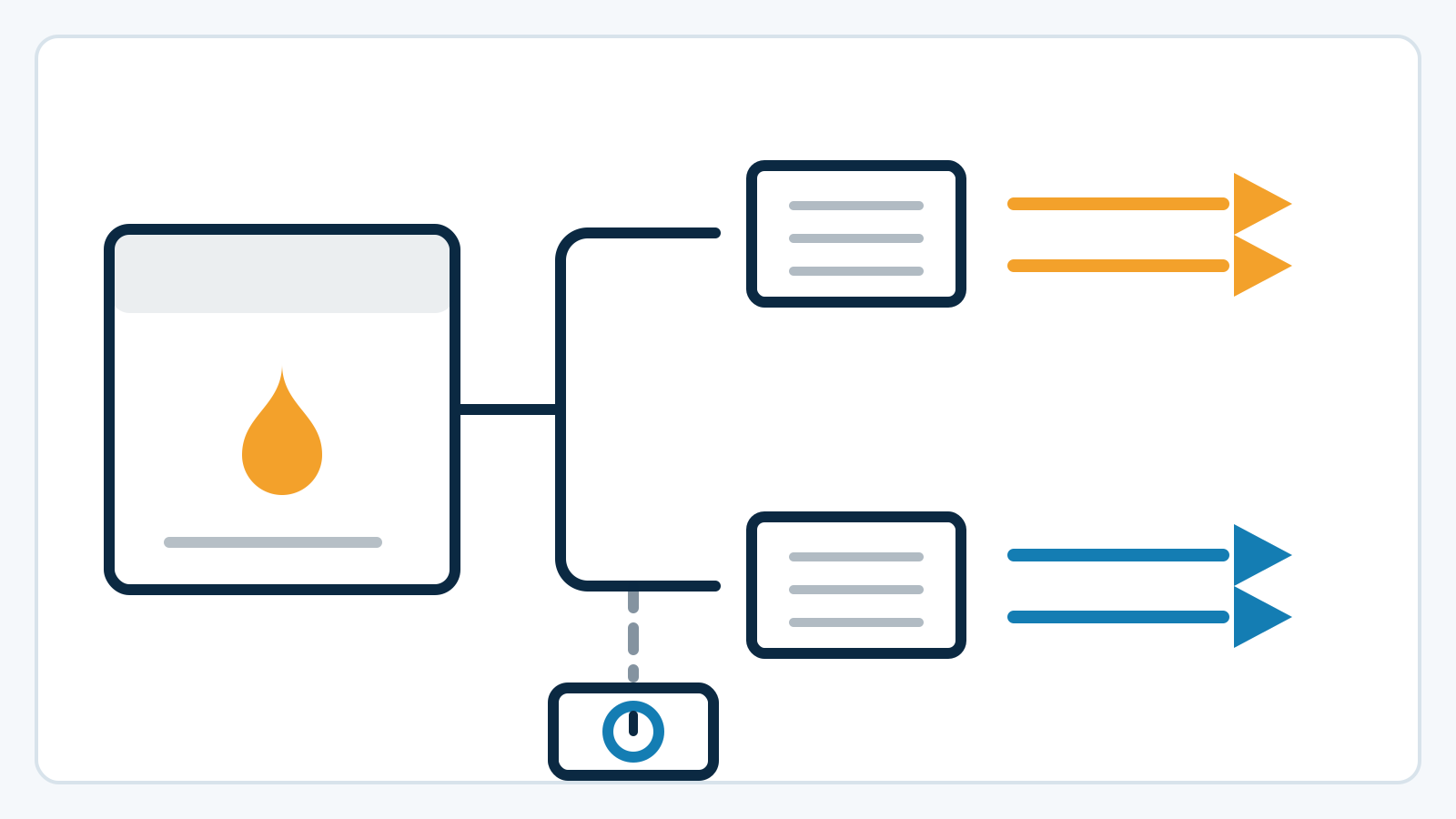
01
Note whether the system is completely off, blowing cool air, cycling, making a new sound, or heating some rooms differently from others.
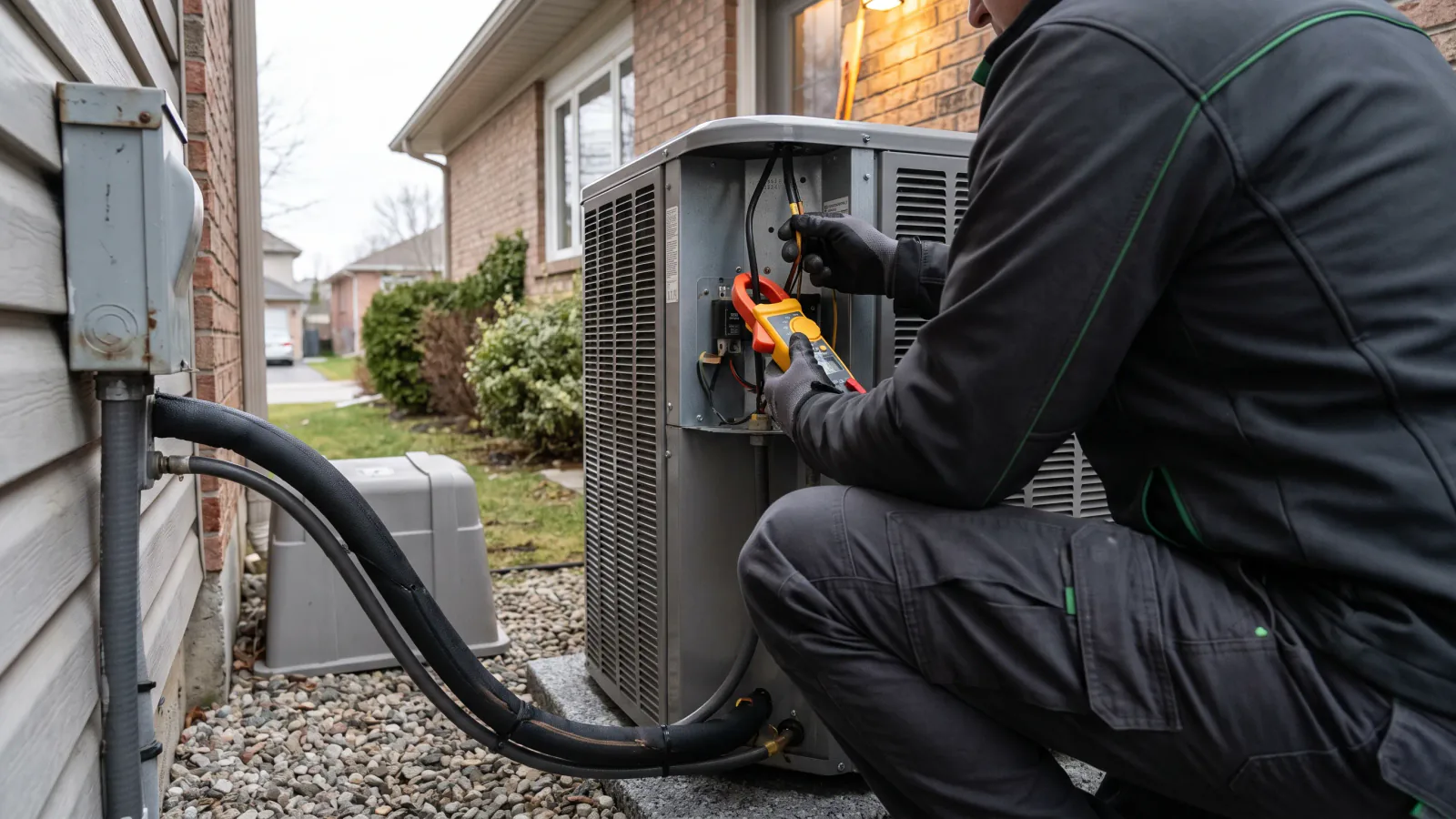
02
The thermostat, zone setup, and ductwork can change how a heating problem looks. They belong in the diagnosis when the symptom points there.
03
The actual fault and condition of the equipment determine whether repair still makes sense.
04
Cool or lukewarm air is a different symptom from no air at all. Check that the thermostat is set to heat and that the target is above the room temperature. Then check whether the fan is set to ON. A fan left on keeps moving air between heating cycles, and that air feels cool at the vent even when the system is fine. These checks describe the symptom. They don't identify the failed part.
05
When nothing runs, note whether the thermostat has power and a display, whether the service switch beside the equipment is on, and whether the breaker sits in the off position. Note any error light or code on the equipment itself. If the system is a heat pump, cool air in cold weather behaves differently and it's covered on the heat-pump page.
06
Gas odors and carbon monoxide alarms are not routine repair symptoms. Follow the safety steps first. ENERGY STAR also puts gas connections, gas pressure, burner combustion and the heat exchanger on the heating check-up list because faults there can create fire and health risks.
Common questions
Check the thermostat mode and target first, then whether the fan is set to ON. A fan left on moves air between heating cycles and feels cool at the vent. Cool air can also come from ignition, control, airflow or equipment faults.
Check the thermostat display and setting, the service switch beside the equipment, the breaker position and a filter you can safely reach. If you smell natural gas, leave immediately and call 911 and the gas utility from a safe location. If a carbon monoxide alarm sounds, get everyone to fresh air and seek emergency medical help if anyone has symptoms.
Not always. A heat pump runs differently from a furnace in cold weather, including defrost cycles that pause the warm air. The heat-pump page covers what is normal and what is not.
Primary sources
Next step
Visits, diagnostics, and repair or installation estimates are free for homes and commercial properties.
Request a Free Estimate4.9 on Google from 28 reviews